
AlvuSana
Science led monitoring of animal gut health
Precision from within
Case Studies: AlvuSana in action
Before going to market, we have spent four years evaluating how our markers respond in different contexts. These studies include: impacts of travel and competition stress on gut inflammation, working with veterinary hospitals to evaluate gut inflammation in clinical cases, studying 'wild guts' in free ranging horses, ponies and zebra, and establishing relationships between behaviour and gut inflammation before and after interventions.
Travel and Competitions

Travelling and staying away are stressful... and are the most important times for peak performance. Our gut profiling can show you how your horses' guts respond to travel and competion stress - and help you design individualised management to best suit you and your horse.
We followed twenty campaigning show jumpers over multiple tours and found inflammation spikes associated with travel. Some horses are more sensitive (show bigger responses) than others. For these horses, travel support (i.e. omeprazole, misoprostal, sulcrafate and GI supplements) helps prevent these spikes (the green bar in the figure) .
Get in touch to see how we can evaluate your horses' guts response to travel or competition.


Validating markers in Challenged Populations
Working with veterinary clinics in the northwest of England, we have collected samples from horses with severe gut inflammation. We have compared our inflammatory and immune markers in this 'clinical' population with asymptomatic horses and also with wild Carneddau ponies (that have higher parasite burdens than domestic horses).
Clinical cases had high inflammation and immune responses, and semi-feral ponies had high mucosal immune function and moderate inflammation.

Managing Tricky Horses

Here are two examples of 'problem horses':
-
The horse that can be reluctant to go forward (sticky or stuffy), resistant in transitions, unwilling to extend (in flat work or over jumps), explosive (bucking, rearing or napping), reactive (spooky, distracted, lack of focus), and grumpy (pinning ears and teeth grinding). It can be hard to decide whether these issues are related to training, pain/discomfort or personality. There is an increasing recognition that gut pain and discomfort can be associated with all of these behaviours. Ruling gut discomfort in, or out, can help focus on how to improve behaviour through management or training (or riding).
-
The horse that chronically colics, may be a fussy eater, and may struggle to maintain weight, energy and condition. They may colic or have free faecal water every time the grass or hay changes. Managing these types of horses can be extremely stressful. Vet call outs are stressful, potentially catastrophic and expensive. Changing management through a trial and error approach can lead to a vicious cycle of chasing management, waiting and hoping for the best, calling the vet for another crisis and starting all over with another set of feeds, supplements and management.
We have worked with owners that are struggling with difficult to manage horses and followed them through interventions (changing diets, yards and adding GI support).

Parasite monitoring in leisure horses and youngstock
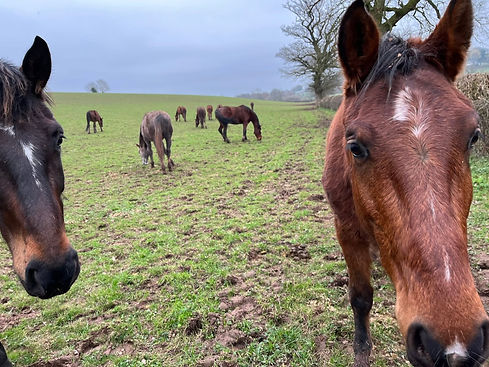
Managing gut parasites in horses is crucial for their overall health. Responsible worming practices are essential to prevent resistance and ensure effectiveness. High parasite burdens can lead to serious conditions like cyathostominosis, which causes severe inflammation. This is a particular issue in young horses before they have fully established immune responses to worms and are not yet in routine work. We have worked with youngstock and leisure horses to track worm burdens, do faecal egg count reduction tests to ensure wormers are working and follow-up monitoring to evaluate rebound. We can couple this with our inflammation and immune markers to highlight horses that are particularly sensitive to wormer use and may need additional GI support.
We offer routine monitoring to assess parasite burdens, recommend appropriate treatments, and provide follow-ups to ensure the chosen wormers are effective for maintaining a healthy gut.
